
March’s competition topic was “Open” for projected and print images. Ed Palaszynski was our judge
Advanced Projected Winners
First Place: Beauty in Repetition, Wendy Kates
Second Place: Fanciful, Beth Koller
Third Place: Beam Me Up, Karen Finkelman
Honorable Mention: Cowboy Silhouette, Karen Finkelman
Honorable Mention: Oaxaca Discussion, Larry Gold
Beth Koller ~ Fanciful
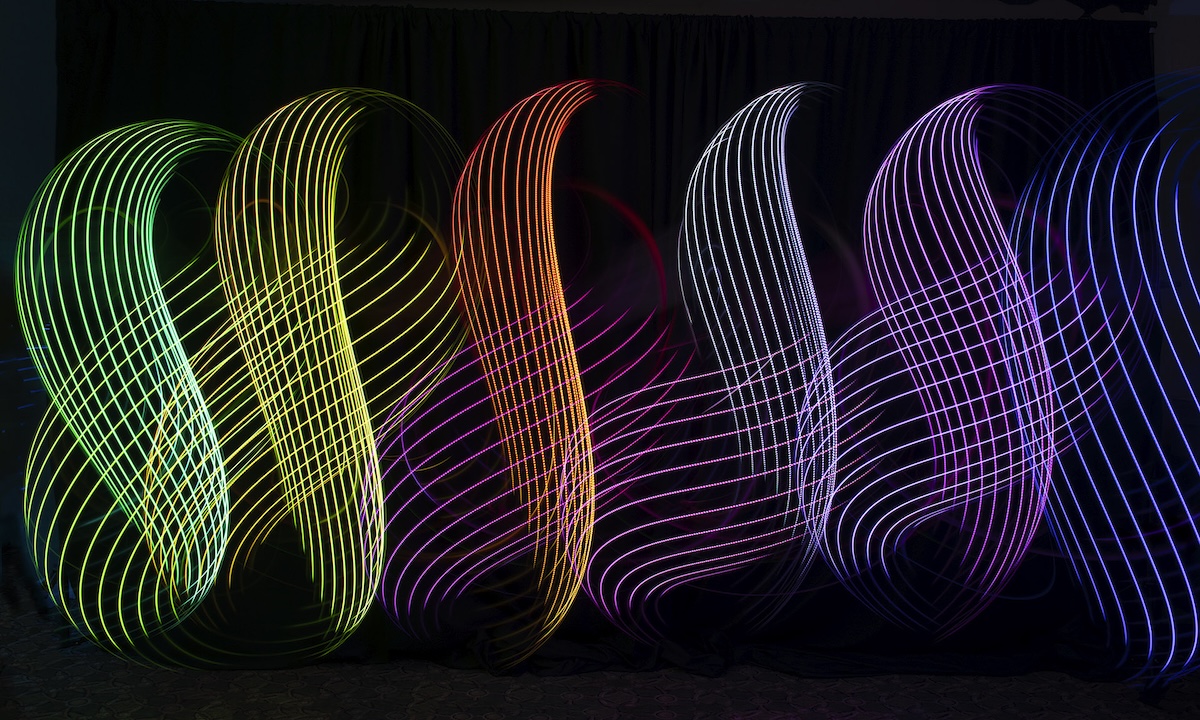
This particular image is lyrical and reminded me of a musical score. This type of image requires a large backdrop in a dark room. It is important to mark your tripod legs with reflective tape so that that you do not run into them. Then it is important to set the focal plane then mark the midway spot in front of the backdrop (and then remove it from the image later during processing). You will need to do a few run-throughs to figure out how quickly to move across your “stage” and how to move your light device to avoid extensive overlap of light that will create image confusion and some very hot areas.
Novice and Intermediate Projected Winners
First Place: Curved and Straight, Will Rabinovich
Second Place: Jazz Singer, Tom Allen
Third Place: Walking on Clouds, Diane Sanders
Honorable Mention: Buns of Steel, Jim Riley
Honorable Mention: RGB, Tanya Riseman
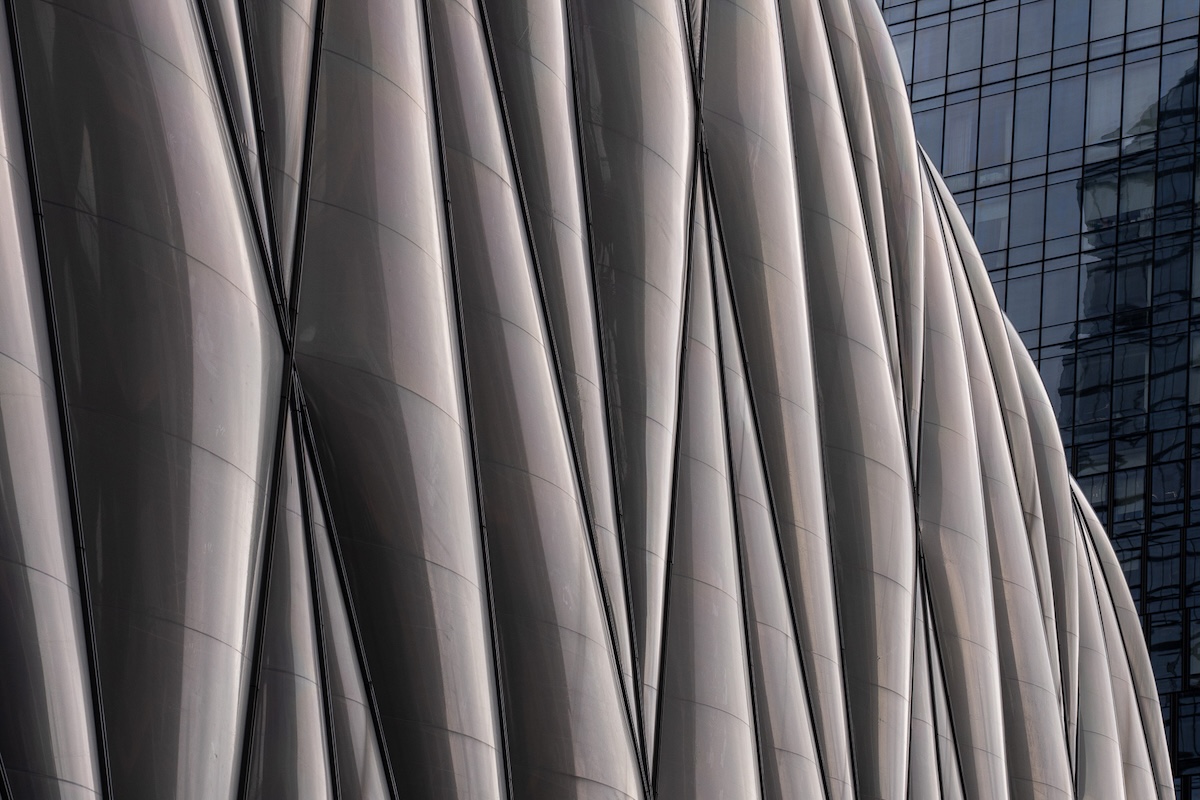
Will Rabinovich ~ Curved and Straight
Combined Print Winners
First Place: Light Jewels, Beth Koller
Second Place: Mist on the River with Empty Chairs, Kay Carkhuff
Third Place: Curiosity, Sherm Edwards
Beth Koller ~ Light-Jewels
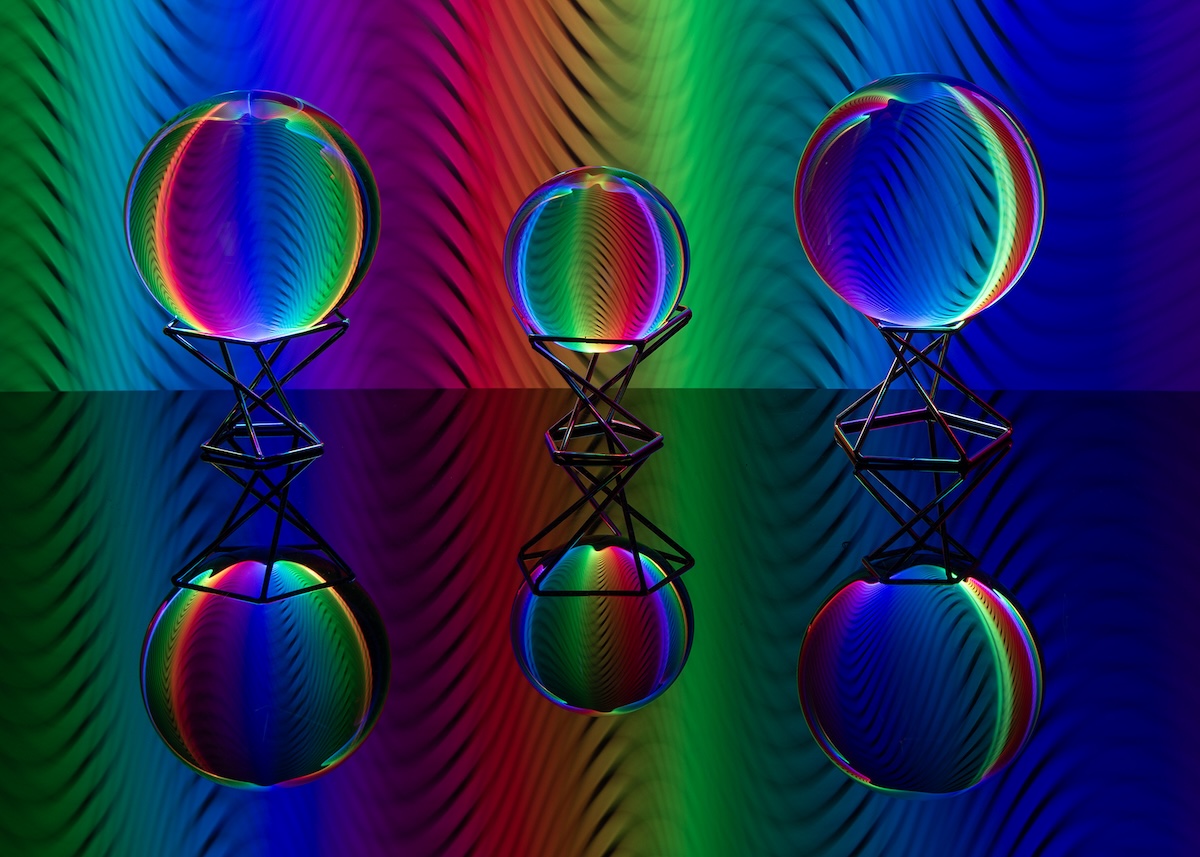
There is a lot of serendipity with light painting even with advance planning—so it is important to keep shooting, make adjustments, and capture multiple images. The light is delivered by a light wand tool from behind the balls. The lens balls and the reflective mylar underneath them bounce the light around. The colors of the light demand attention because some are hotter than others requiring exposure adjustments. Here the colors were relatively similar, and the intense saturation made the simple geometry just pop.