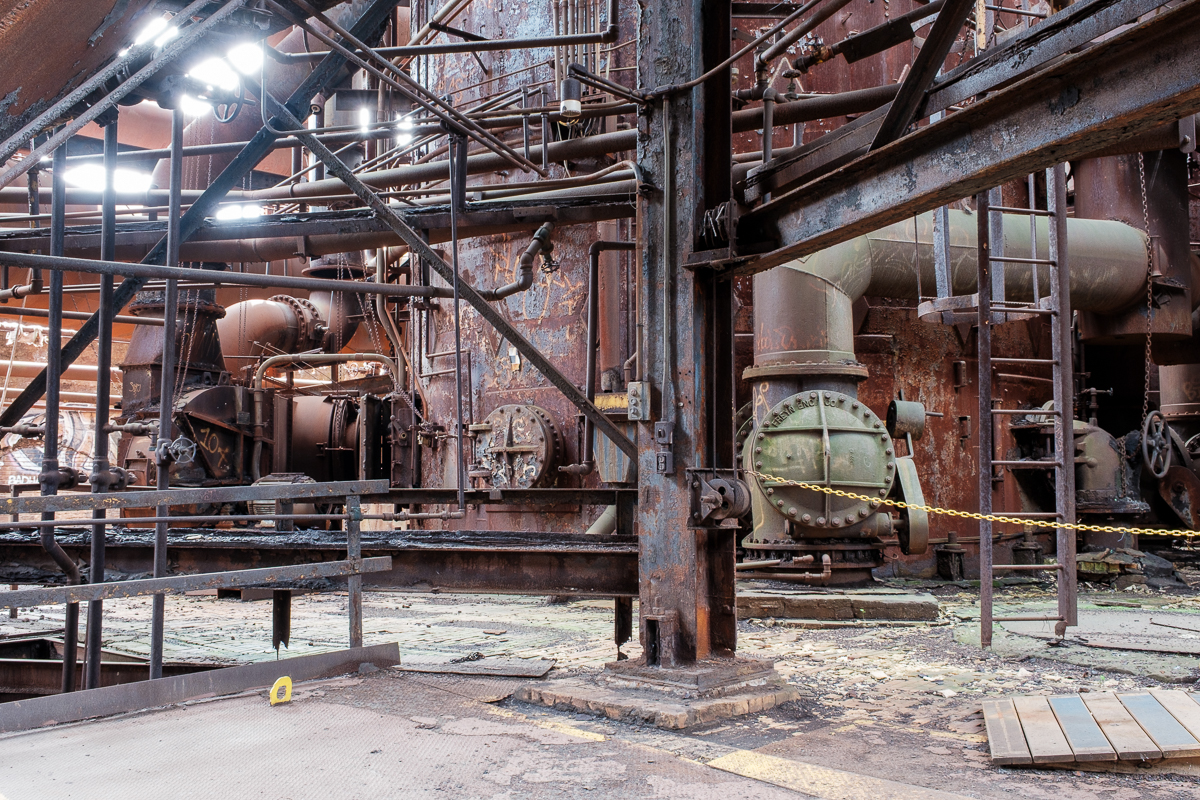
Over the weekend of May 31-June1, three members of the club — Beth Koller, Sherm Edwards, and Maurice Belanger — traveled to the Pittsburgh area to visit two abandoned sites.
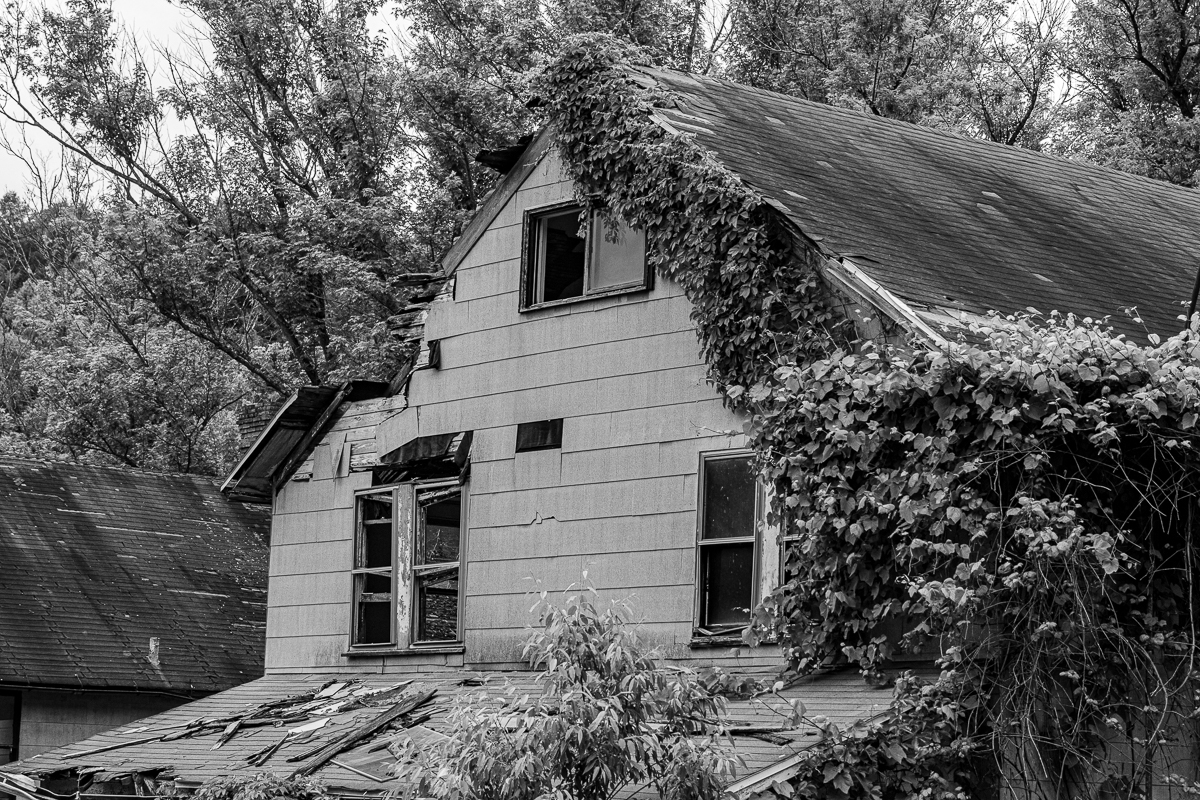
Yellow Dog Village was built by the Pittsburgh Limestone Company for its workers. The company provided housing and raised wages in exchange for workers giving up their right to form a union — a contract known as a yellow dog contract, hence the name of the town. The homes are from the 1910s and 1920s. The limestone mines were closed in the 1950s, but families continued to live in the homes until the last family moved out around 2010. The village was abandoned and heavily vandalized between 2010 and 2014, when it was purchased by a retired history teacher who had planned to restore the homes. The village was sold again in 2022. The current owner plans to “preserve its historical structures and stories.”
Our small group was free to roam the village, as long as we didn’t enter houses blocked off due to concerns about structural integrity. On the grounds, a herd of sheep and goats had been rented for lawn mowing duty. Inside many of the homes, there were piles of trash — a mix of items abandoned by families who left and more modern items perhaps dumped during the period of abandonment. Below is a gallery of our photos from that site, along with one from our lunch stop, the Car and Carriage Museum at the Frick Pittsburgh.
Our next stop was the Carrie Blast Furnances National Historic Landmark, currently run by the nonprofit group, Rivers of Steel. Since our Sunday morning was open, we opted to take the group’s Industrial Tour, which gave us an overview of the history and allowed us to do some reconnaissance for our afternoon photo safari.
Once part of the Homestead Steel Works, the Carrie Furnances were built in 1907 and for seven decades produced the iron that would be used by the steel mill across the Monongahela River. There were seven furnaces at this site. Two of them have been preserved; the remaining furnaces have been scrapped. On the tour, we learned about the process of taking iron ore mined in Minnesota and turned into the molten product that comes out of a blast furnace where temperatures reach 4,000 degrees. The work took an incredible toll on the workers at the plant — especially in the days before modern protective gear.
Sunday afternoon, we had a free hand to wander among the giant structures of the plant, as long as they were not cordoned off for safety reasons. A few pictures from our photo safari are in the gallery below.